The British EYFS, taught in two languages
What the curriculum actually looks like when your child is three.
The seven areas we plan around
The EYFS framework groups early learning into seven areas. Three are described as prime — they come first, because everything else is built on them.
- Prime area
Communication and language
Listening, understanding, and finding the words — in both English and Arabic.
- Prime area
Physical development
Big movements and small ones: running and climbing, then holding a pencil and using scissors.
- Prime area
Personal, social and emotional development
Sharing, waiting, naming feelings, and managing the ordinary difficulty of being small.
- Specific area
Literacy
Loving books first; letters, sounds and early writing second.
- Specific area
Mathematics
Counting, comparing, patterns and shapes — mostly through handling real things.
- Specific area
Understanding the world
People, places, living things and how they change. This is where the trees come in.
- Specific area
Expressive arts and design
Drawing, painting, building, music and pretending — thinking made visible.
How the two languages work
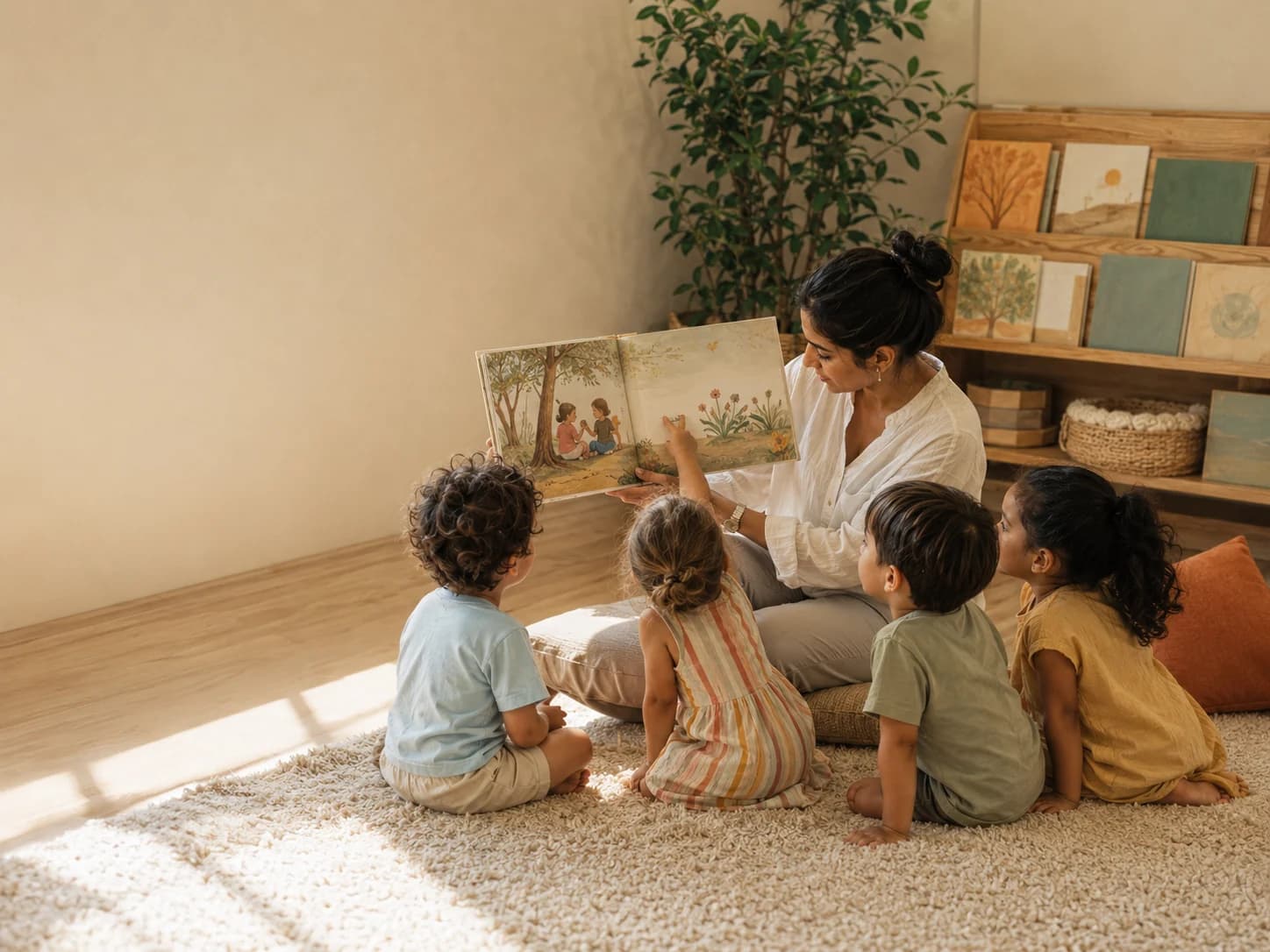
Both languages are present through the day rather than separated into slots. Children hear stories, instructions, songs and conversation in English and in Arabic, from adults who speak them naturally.
Young children are unusually good at this. They do not translate between languages so much as build two of them at once, and the earlier that starts, the less effort it takes.